Who Sells "Natural Health" in Alberta? The Licence Record, 2004–2017
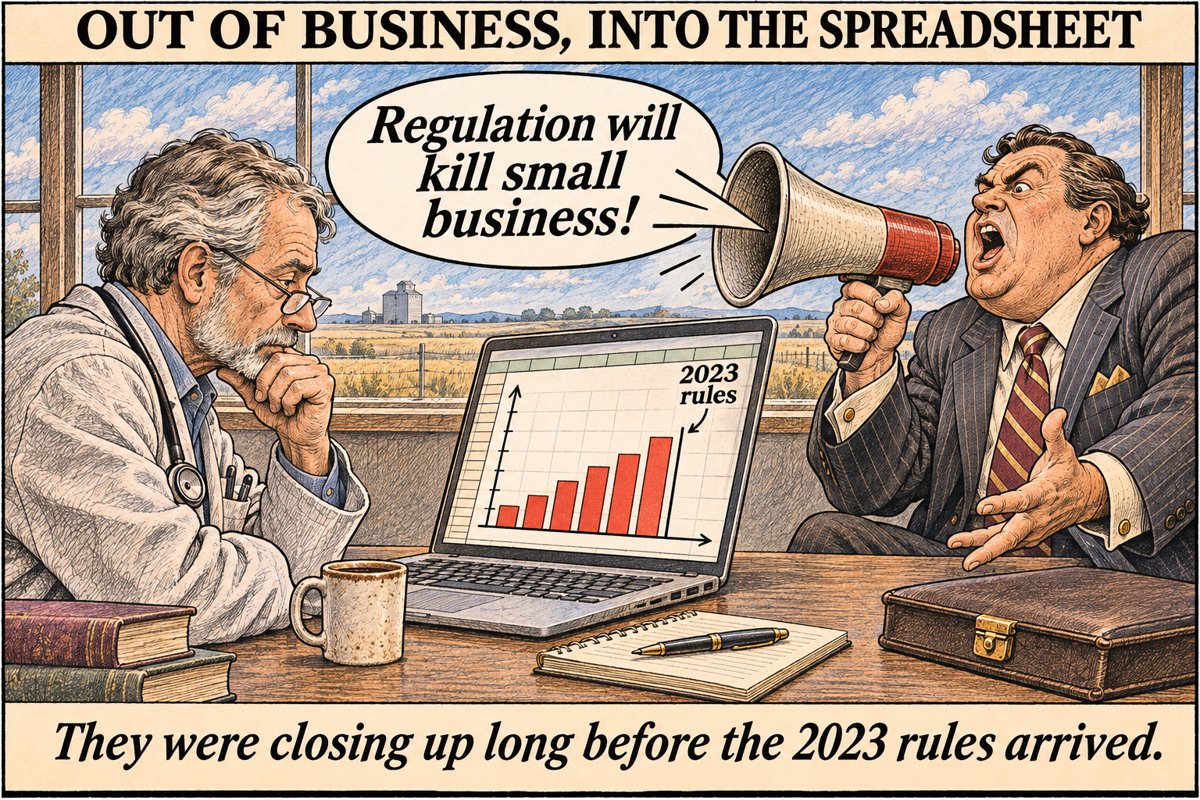
Bill C-224's supporters say Health Canada's rules will wipe out small natural health product businesses. We went through Health Canada's own licence data to see who those businesses are in Alberta, the bill sponsor's home province, and how they compare with the province's real drug makers.
The short version
- 166 Alberta companies held 2,190 natural health product (NHP) licences between 2004 and September 2017. That is about 2.7% of all NHP licences in Canada.
- Most were tiny. 69 held a single licence; 131 of the 166 held five or fewer.
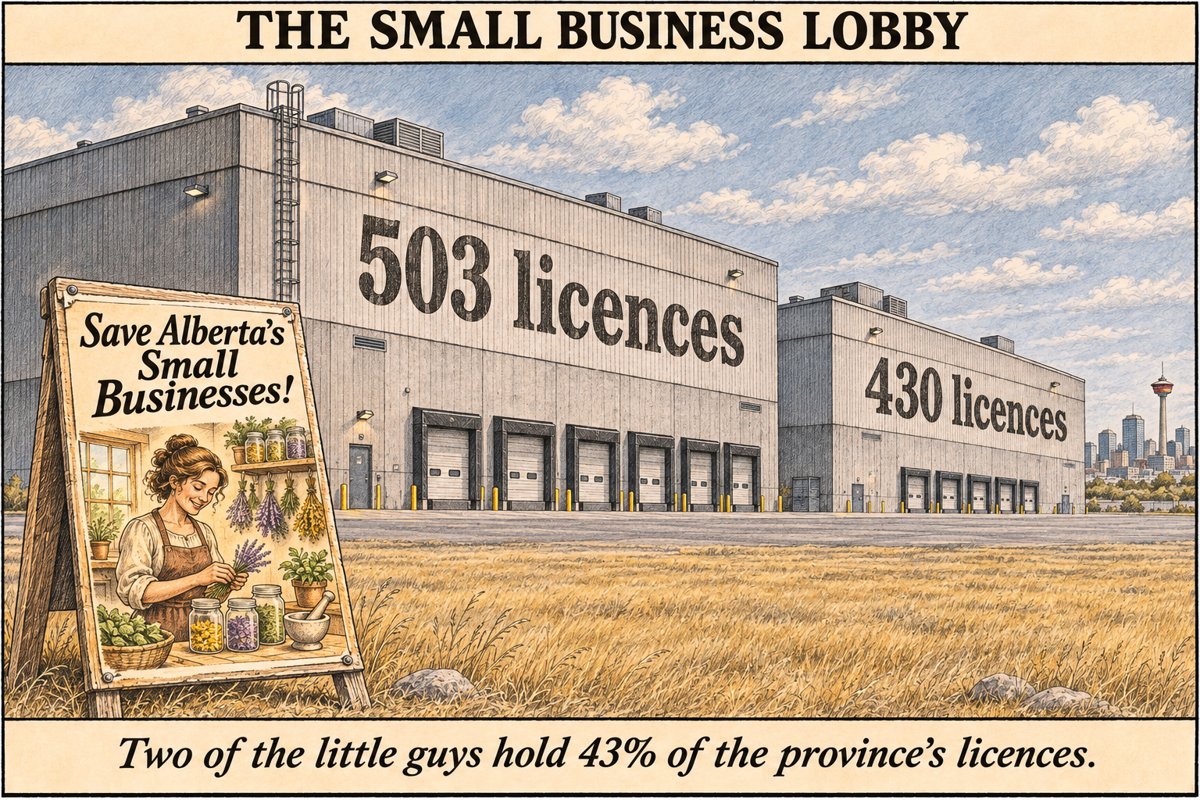
- Two Calgary companies held 43% of Alberta's licences: Imperia Brand Strategies & Solutions (503) and Advanced Orthomolecular Research (430).
- Turnover is high. 79 companies took out their last new licence in 2014 or earlier.
- Few drug companies are based in Alberta. Only 5 Alberta-headquartered companies still market a human drug in Canada, 68 products in all, mostly dialysis solutions and over-the-counter creams.
- The real drug manufacturing is mostly foreign-owned or publicly funded. The biggest plant, Gilead’s in Edmonton, makes active ingredients for a California drug company, and a publicly funded non-profit is building a medicines plant next to it. See below.
Where these numbers come from
Every natural health product sold legally in Canada needs a product licence and an eight-digit Natural Product Number (NPN) or homeopathic DIN-HM. See our guide, What an NPN on the label does and doesn't mean. Health Canada publishes the licence holder's name and address for each product. We used two public Health Canada files:
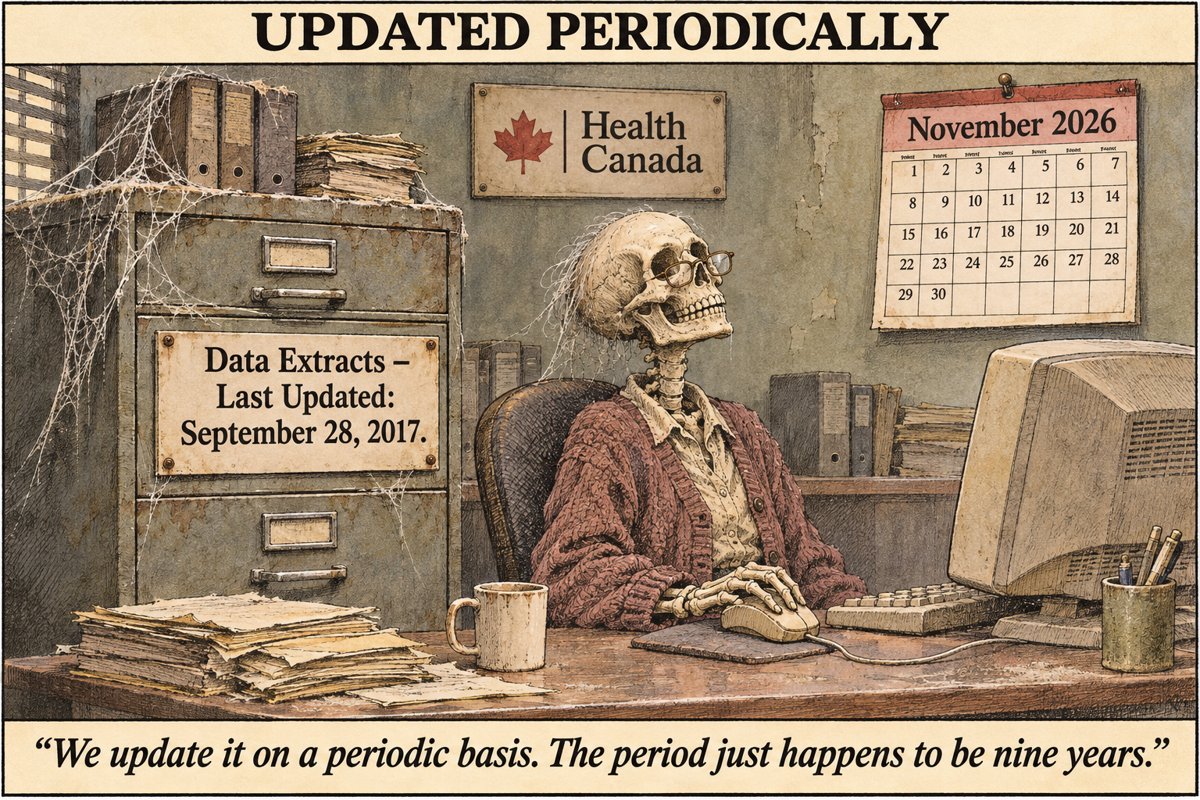
- The Licensed Natural Health Products Database (LNHPD) data extract, which lists 82,112 licensed products and their licence holders. Health Canada stopped updating this download in September 2017, so licences issued since then are not in it.
- The Drug Product Database (DPD) extract, current to November 2026, which lists every company that has held a drug identification number (DIN) since 1996, and whether each product is a human drug, veterinary drug, disinfectant or radiopharmaceutical.
We kept every company whose listed address is in Alberta. A company is counted where its office is, not where its products are made.
New companies, and companies that went quiet
The green bars count Alberta companies by the year of their first NHP licence. The red bars count them by the year of their last new licence. From 2012 on, about as many companies stopped taking out licences each year as started.
A first licence is not a founding date. Many of these firms sold vitamins and herbal products for years under the old drug rules before NHP licensing began in 2004. A last licence is not proof of closure, either. A company can keep selling products it already has licences for. It is, however, a reasonable sign of which companies stopped bringing out new products.
Licences issued per year
Licences to Alberta companies peaked at 403 in 2013 and 502 in 2015. Both peaks come from one company. Imperia Brand Strategies & Solutions received 146 licences in 2013 and 351 in 2015. Without Imperia, Alberta licences peaked at about 260 to 280 a year in 2012 and 2013, then fell to about 140 to 150 a year in 2015 and 2016.
Alberta's biggest licence holders
Holding a licence does not mean making the product. Many licence holders are brand owners or distributors who have products made elsewhere.
| Licence holder | City | Licences | Years | Most common ingredients |
|---|---|---|---|---|
| Imperia Brand Strategies & Solutions Ltd. | Calgary | 503 | 2013–2017 | Copper; Zinc oxide; Vitamin D |
| Advanced Orthomolecular Research Inc. | Calgary | 430 | 2006–2017 | Magnesium; Vitamin C; Vitamin B12 |
| Good For You Corp. | Calgary | 98 | 2006–2015 | Calcium; Citrus bioflavonoids; Zinc |
| Life Choice Ltd. | Cochrane | 97 | 2009–2017 | Vitamin B6; Vitamin B12; Folate |
| Nutri-Dyn Products Ltd. DBA Professional Health Products | Innisfail | 89 | 2005–2014 | Vitamin C; Vitamin B6; Zinc |
| Bona Vita Holdings Inc. | Sherwood Park | 82 | 2005–2014 | Fish oil; Glucosamine sulfate; Echinacea angustifolia |
| 1669652 Alberta Ltd | Calgary | 81 | 2012–2013 | Citrus Bioflavonoids; Beta-aminopropionic acid; Chitosan |
| Olds Softgels Inc. | Olds | 77 | 2007–2017 | Fish oil; Vitamin E; Vitamin D |
| Optimum Health Choices Inc. | Edmonton | 76 | 2013–2017 | Camellia sinensis; Gallus gallus; Krill oil |
| CRLS | Calgary | 61 | 2006–2016 | (11beta)-11,17,21-Trihydroxypregn-4-ene-3,20-dione; 4-Aminobenzoic acid, ethyl ester; Salicylic acid |
| Avena Originals | Red Deer | 53 | 2008–2017 | Triacylglycerol lipase; Fungal protease; Lactobacillus plantarum |
| Afinity Life Sciences Inc. | Edmonton | 29 | 2009–2015 | Fish oil; Panax ginseng; Soy isoflavone extract |
The full list of all 166 companies is in our spreadsheet (see below).
A familiar name from Cardston
Synergy Group of Canada Inc. of Cardston, the company behind Truehope's EMPowerplus, held 9 NHP licences between 2005 and 2014, mostly mineral and vitamin capsules, tablets and powders. Its lawyer in its long fight with Health Canada was Shawn Buckley, now the leading voice for Bill C-224. See our profile of Buckley.
The comparison: Alberta's drug companies
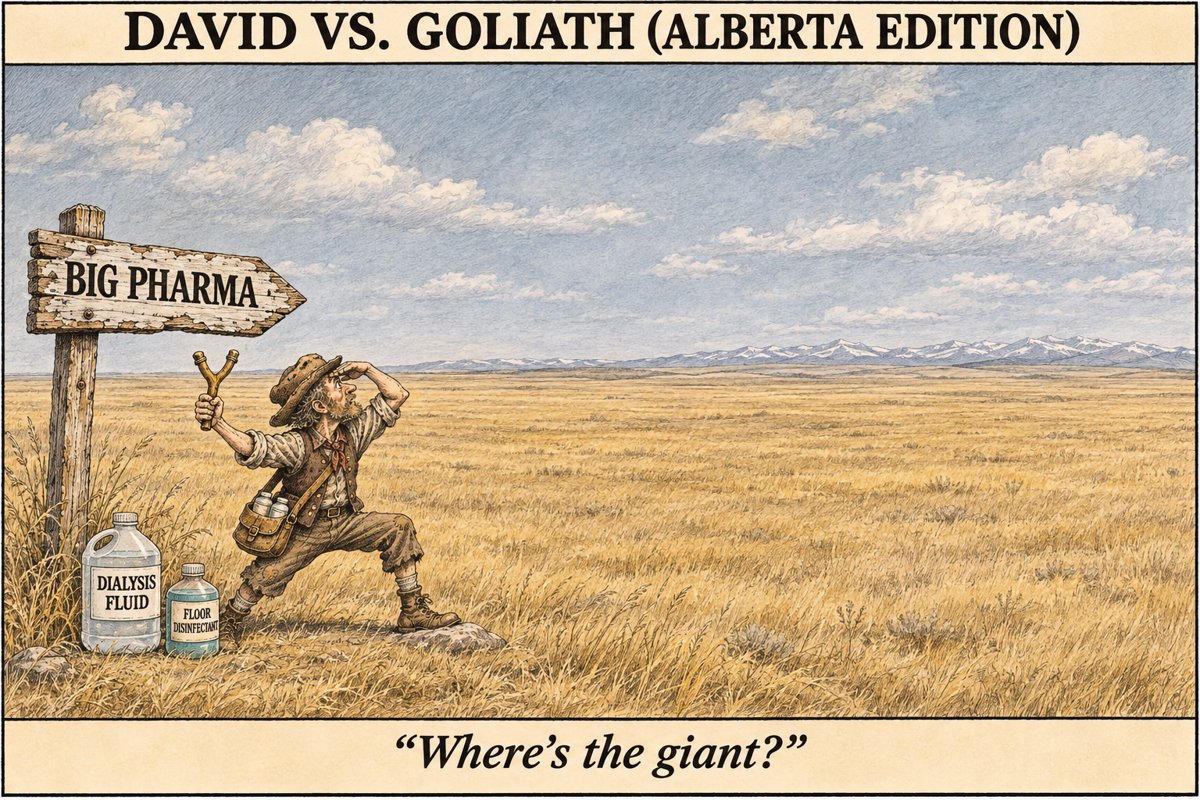
Bill C-224's backers often frame natural health products as a small-business sector up against "Big Pharma." In Alberta there is very little pharma to be up against. Since 1996, 107 Alberta companies have held a drug identification number. Most were never drug companies in the usual sense:
| Main product type | Alberta companies, all years | Still marketing a product |
|---|---|---|
| Disinfectants (cleaners, sanitizers) | 48 | 18 |
| Human drugs | 47 | 3 |
| Veterinary drugs | 9 | 2 |
| Radiopharmaceuticals (hospital imaging) | 3 | 2 |
| Total | 107 | 25 |
Only 5 Alberta companies still market any human drug, 68 products in all. The largest is Chief Medical Supplies of Calgary (40 products, mostly dialysis concentrates), followed by CRLS of Calgary (21, mostly over-the-counter pain rubs and creams). The one Alberta-based generic prescription-drug company in the data, Avanstra Inc. of Calgary, had all 165 of its DINs cancelled.
Many of the cancelled "human drug" DINs belonged to vitamin companies, not drug makers. Professional Health Products and Nutri-Dyn (Innisfail), Nutri-West (Red Deer County) and New Vision Nutritionals (Calgary) held DINs for vitamins and herbal products. Those moved to NHP licences after 2004, when the new rules took over.
Where drugs are actually made in Alberta
The Drug Product Database lists the company that owns each drug licence, at its head-office address. That misses plants in Alberta owned by companies headquartered elsewhere. Alberta’s largest drug manufacturer doesn’t appear in the list above at all.
| Site | Where | What it does | Size |
|---|---|---|---|
| Gilead Alberta ULC, a subsidiary of Gilead Sciences (Foster City, California) | Edmonton | Develops and manufactures active pharmaceutical ingredients for most of Gilead’s small-molecule drugs and for its worldwide research programs. Its general manager has called it Gilead’s biggest manufacturing site, and the only one making active ingredients at that scale. In 2020 it was assigned to make remdesivir for COVID-19. | About 300 employees in the mid-2010s, after several expansions |
| Applied Pharmaceutical Innovation (API), a federally incorporated not-for-profit working with the University of Alberta | Edmonton Research Park | Its Drug Development and Innovation Centre holds a Health Canada drug establishment licence with a GMP compliance rating. It is building the Critical Medicines Production Centre to make active ingredients and sterile fill-and-finish drugs. The centre was due for completion in 2026. | More than $80 million in federal funding and $5.6 million from Alberta |
| Entos Pharmaceuticals | Edmonton | Biotech developing genetic medicines. It made clinical-trial supplies of its COVID-19 DNA vaccine, Covigenix, with inputs from API. | Development stage |
| Alberta Health Services radiopharmacies | Calgary and Edmonton | Short-lived radioactive drugs for hospital imaging, made close to where they are used. | Public hospital service |
| Chief Medical Supplies | Calgary | Dialysis concentrates. With 40 DINs on the market, it is the largest Alberta-headquartered holder of human drug licences. | Private company |
How big is the industry? Estimates vary with what is counted. In 2016 the brand-name drug industry association, Innovative Medicines Canada, counted 573 member-company jobs in Alberta. The market-research firm IBISWorld puts Alberta brand-name drug manufacturing at about 1,400 workers. Dun & Bradstreet lists 87 Alberta businesses under “pharmaceutical and medicine manufacturing,” but that industry code also includes vitamin and herbal makers. Either way, it is a small share of a national industry concentrated in Ontario and Quebec.
This is still an incomplete list. Every building in Canada where drugs are made, packaged or tested needs a Health Canada drug establishment licence. Every building where natural health products are made needs a site licence. A full comparison of drug plants and NHP plants in Alberta would use both lists. We are collecting them and will add the results here.
Alberta’s push for drug manufacturing
Alberta governments of every stripe have tried for at least a decade to attract drug manufacturing. Premier Danielle Smith’s government has kept funding the effort.
| Year | Government | What happened |
|---|---|---|
| 2016 | NDP (Notley) | The province asked Ottawa for help bringing the pharmaceutical industry to Alberta. |
| 2017 | NDP (Notley) | Alberta signed a memorandum of understanding with Innovative Medicines Canada, the brand-name drug industry association, to attract research investment. |
| 2021 | UCP (Kenney) | Pharmaceuticals and life sciences named a target sector in the economic recovery plan. The province committed $81.5 million, including vaccine development, and asked for proposals to make vaccines in Alberta. Kenney called it a way to “prime the pump” for federal money. |
| 2022–23 | UCP (Smith) | $5.6 million to Applied Pharmaceutical Innovation and $20 million to the University of Alberta’s Li Ka Shing Institute. The province says its money helped secure $80.5 million from Ottawa for the Canadian Critical Drug Initiative. |
| 2023 | UCP (Smith) | $5 million toward Northern RNA in Calgary, alongside $20 million federal, to make lipids for the vaccine supply chain. |
| 2025 | UCP (Smith) | Federal and provincial money, including $15.5 million from Alberta, toward Entos Pharmaceuticals’ $198.5 million R&D centre and GMP biomanufacturing plant in Edmonton. Entos develops genetic medicines and has tested a COVID-19 DNA vaccine. |
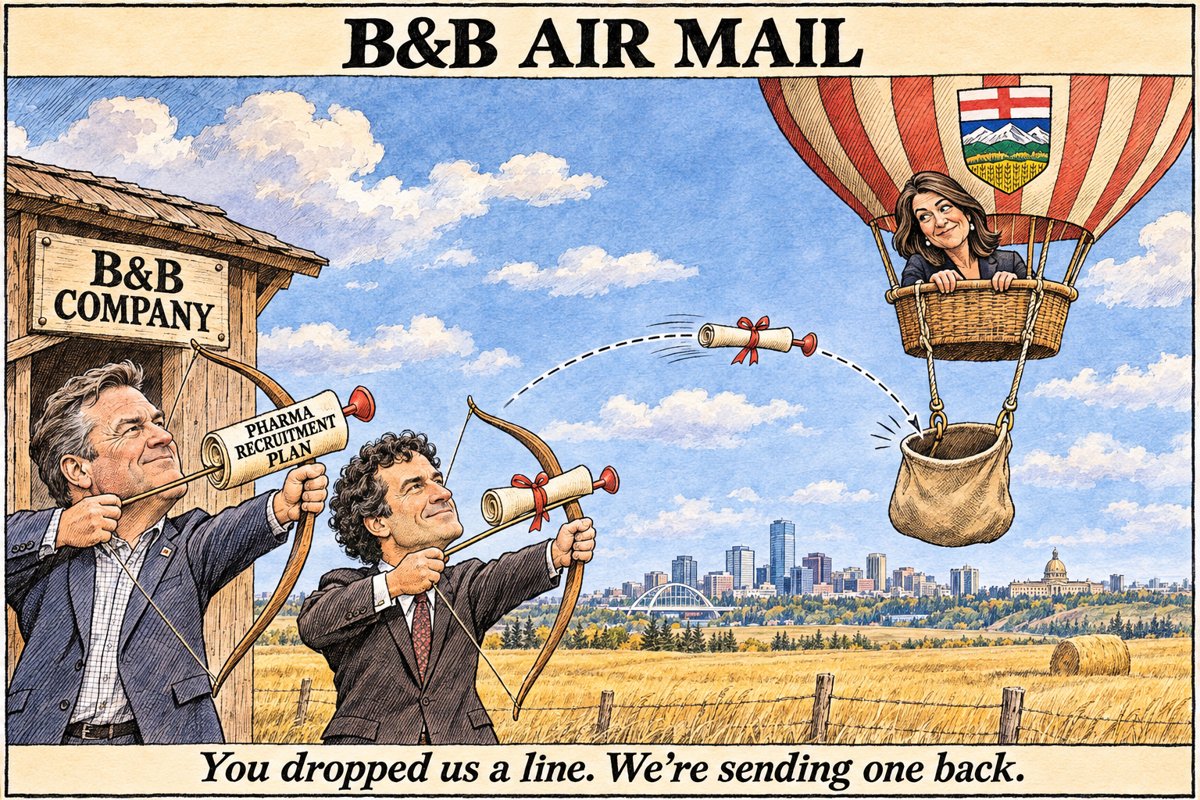
For the premier’s own statements on COVID-19 vaccines, see Southern Alberta’s Vaccine Gap.
A sector of small firms. Press and industry reports have said for years that the sector is mostly small. A 2016 Edmonton Journal report noted there was no biotech equivalent of the province’s energy giants. BioAlberta’s 2021 industry survey found that 62.6% of Alberta life-sciences companies employed fewer than seven people. In 2022 The Logic framed the Critical Drug Initiative against the province’s long struggle to diversify away from oil and gas.
When the shelves went empty: the Atabay deal
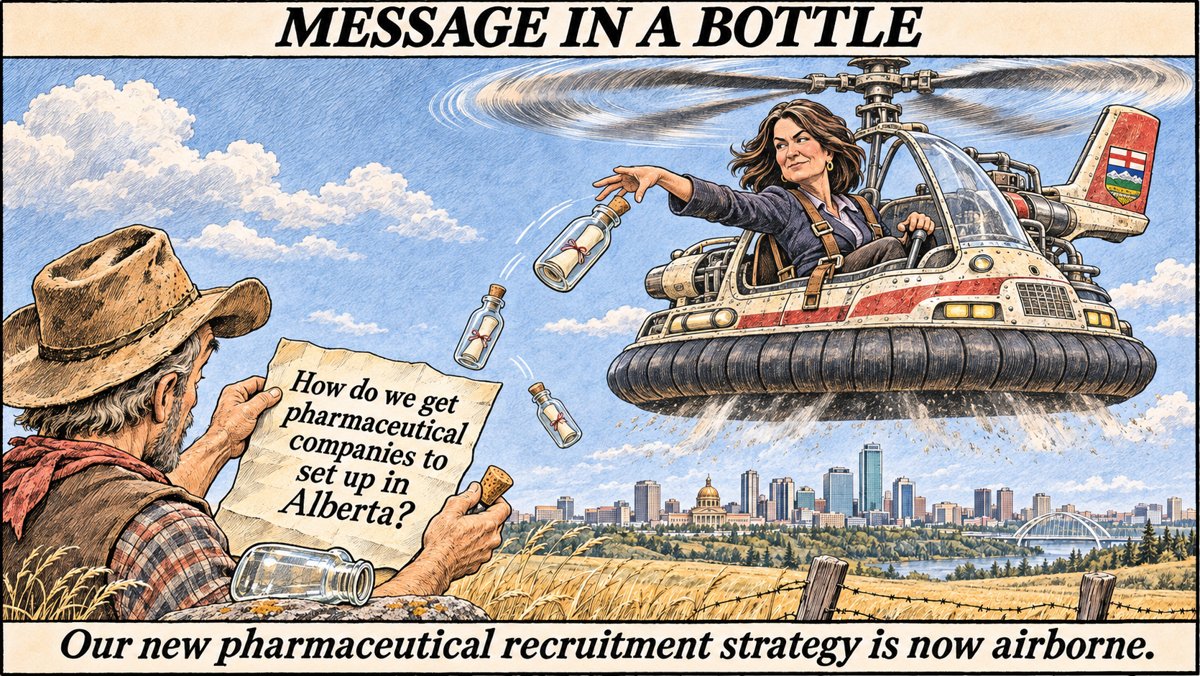
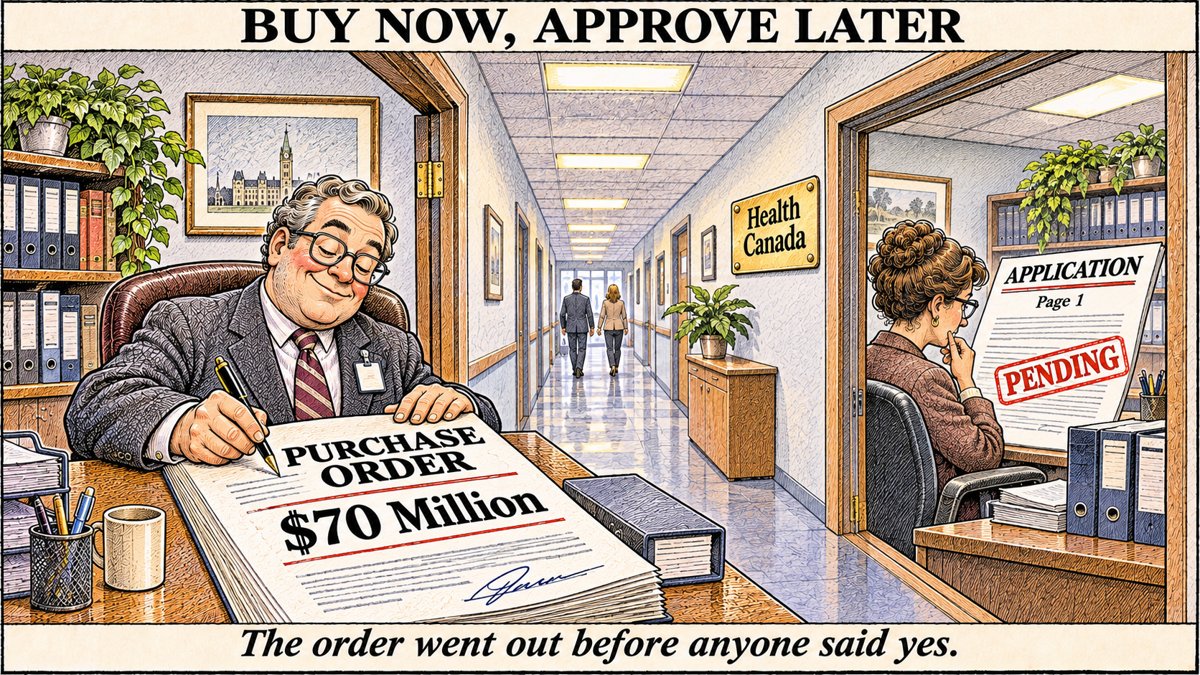
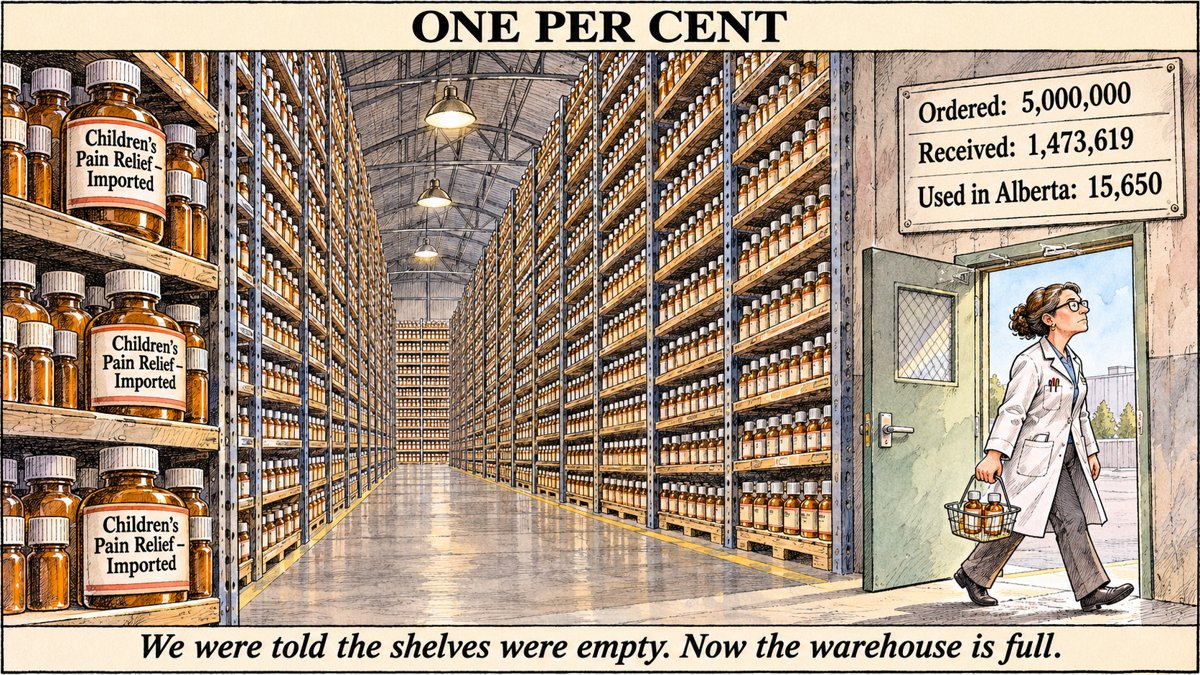
During the national shortage of children’s pain and fever medicine in late 2022, Alberta had no domestic supplier to turn to. On 1 December 2022 Health Minister Jason Copping directed AHS to “take all necessary steps to procure on an expedited basis.” Days later he and Premier Smith announced a deal for five million bottles of children’s acetaminophen (Parol) and ibuprofen (Pedifen) made by Istanbul-based Atabay Pharmaceuticals and Fine Chemicals, imported through the Edmonton supplier MHCare Medical. The $70-million purchase order was issued before Health Canada had approved the products.
- Cost: about $80 million, $70 million for the product and about $10 million for shipping and administration, as Copping told a budget hearing in March 2023.
- What arrived: Health Canada approved only about 1.5 million bottles. AHS received about $20 million worth: 984,468 bottles of acetaminophen and 489,151 of ibuprofen. By the time most arrived in spring 2023, the domestic shortage was over.
- What it was used for: pharmacists kept it behind the counter because its dose was weaker than Canadian products. On 10 July 2023 AHS told hospitals to stop using Parol, and neonatal units stopped using it over safety concerns. AHS says no patients were harmed. Of 1,473,619 bottles received, only 10,950 went to hospitals and 4,700 to pharmacies, about 1%.
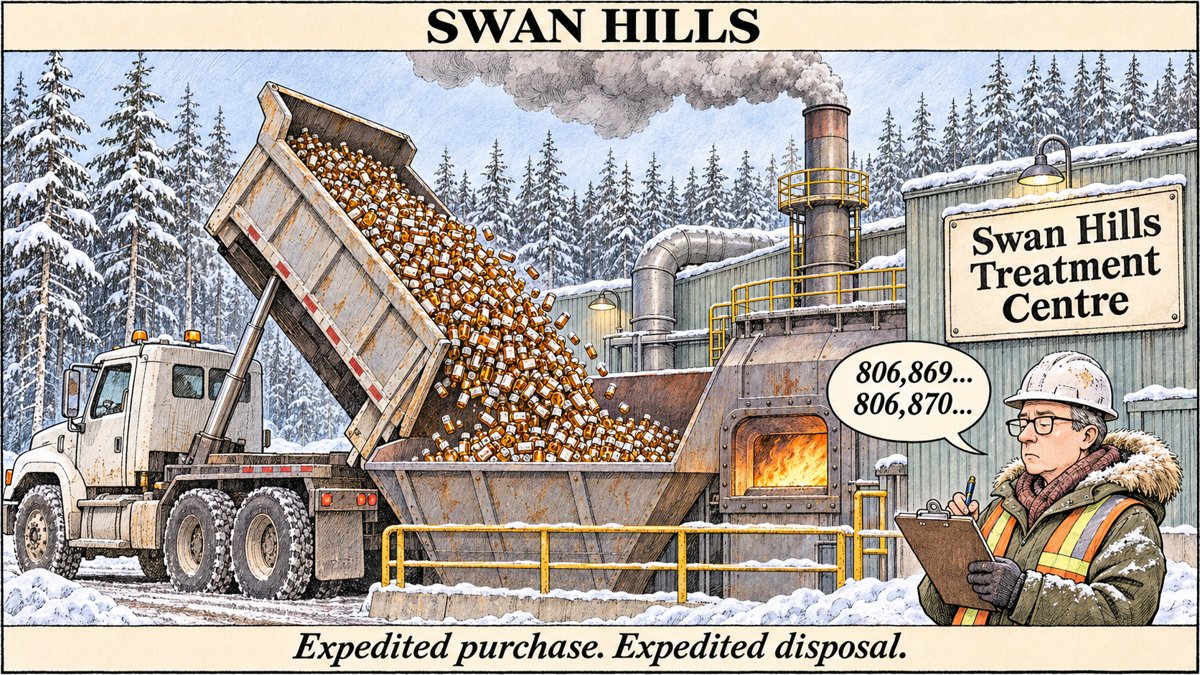
- Where the rest went: about 44% was donated abroad through Health Partners International Canada. As of 12 February 2026, 806,869 bottles had been destroyed at Swan Hills as they neared expiry.
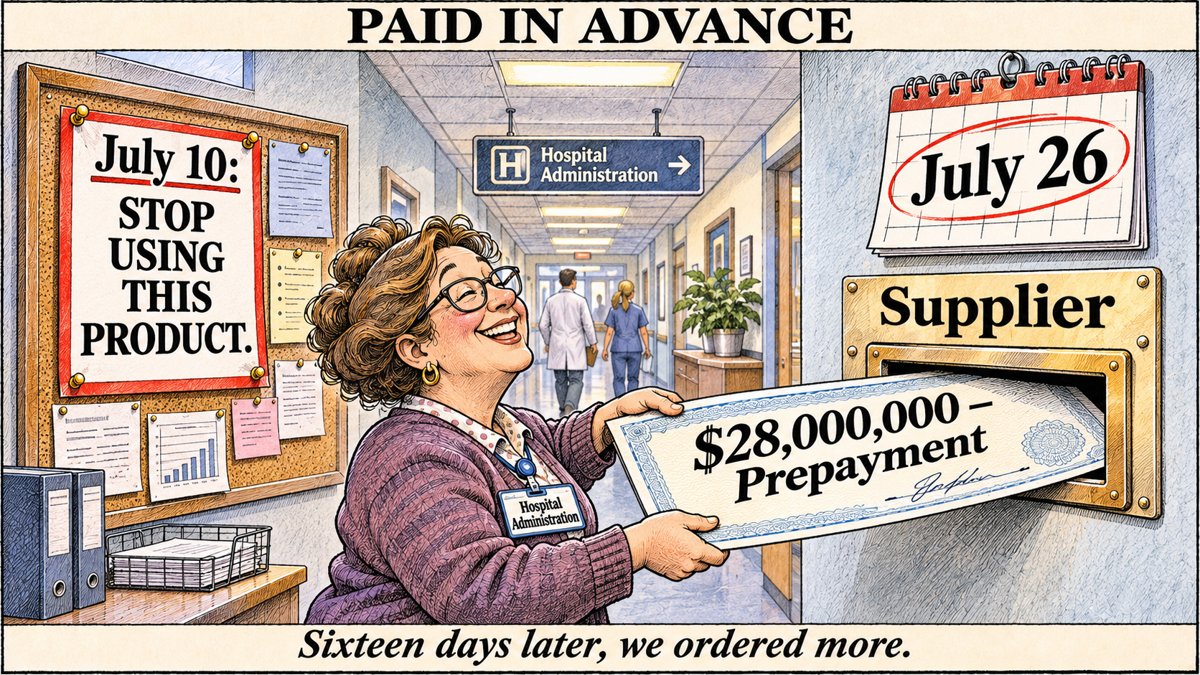
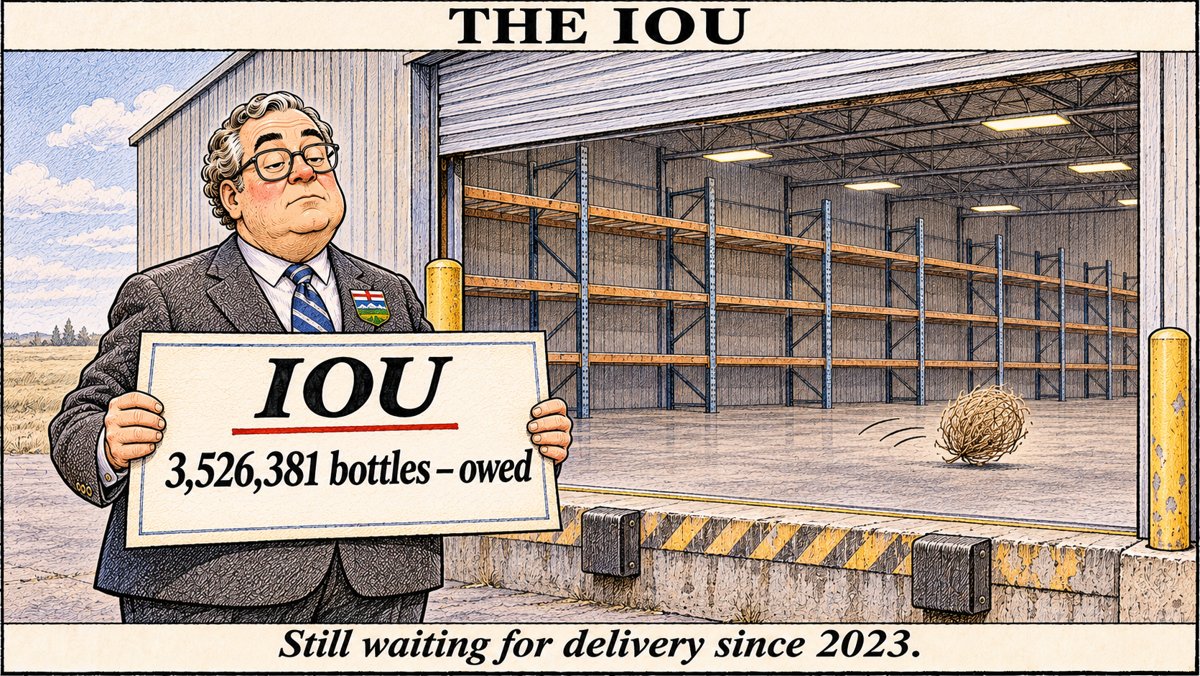
- More contracts, more prepayments: in July 2023 AHS signed a further five-year, $56-million deal with MHCare for alternative Atabay products. Postmedia reported that AHS prepaid $28 million on 26 July 2023, sixteen days after the hospital stop-use order. As of 31 October 2025, $49 million in product, the equivalent of 3,526,381 bottles, had never been delivered.
The Wyant review. Retired Manitoba judge Raymond Wyant, appointed by the government to review AHS procurement, reported in October 2025 “serious procurement and contract-mismanagement failures within AHS,” while finding no evidence of wrongdoing by elected officials, political staff or the public service. In a March 2026 addendum he said he could not find support for the $56-million contract value, and forensic accountants at RSM Canada could not explain why it had risen by $7 million. The government says it has accepted all his recommendations.
Where it stands. In March 2026 AHS said it had abandoned efforts to get substitute products and was “reviewing legal remedies to obtain reimbursement” of the $49 million. MHCare, through its lawyer, says it can still meet the terms of the contract. That month the RCMP executed search warrants at MHCare’s Edmonton offices in an investigation of AHS contracts. MHCare, owned by Sam Mraiche, is mentioned repeatedly in a wrongful-dismissal lawsuit by the former head of AHS but is not a defendant. No allegations have been proven in court, and MHCare, Mraiche and the premier deny any wrongdoing. Smith has said she stands by the decision to import the medicine.
The Atabay deal in five cartoons.
What this means for the C-224 debate
The natural health product business in Alberta is real, but it is mostly very small companies with a handful of products each, plus two large Calgary licence holders. They were licensed under the same rules Bill C-224 would leave in place. The bill would not remove the licence requirement that has existed since 2004. It would remove Health Canada's 2023 powers to recall unsafe products, order label changes and impose penalties.
Alberta does have serious drug manufacturing, but very little of it is a home-grown “Big Pharma” competing with local supplement sellers. Its largest drug plant belongs to an American company and makes ingredients for world markets. Its newest is a publicly funded non-profit built to ease drug shortages. Both work under the full drug rules, including the recall and penalty powers Bill C-224 would take away from natural health products.
What the data can't tell us
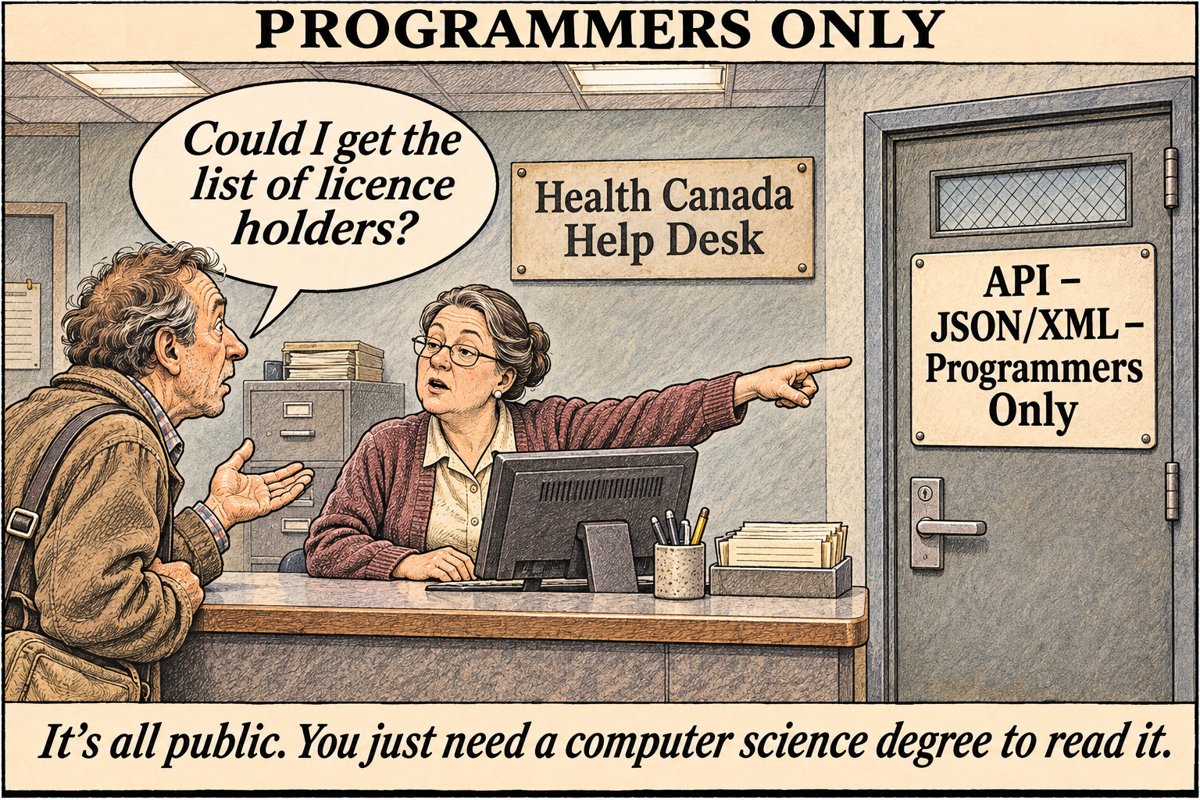
- Anything after September 2017. The live LNHPD has newer licences, but Health Canada no longer offers a bulk download with addresses. On 5 November 2026 we asked Health Canada why the data stops in 2017 and requested a current extract. We will update this page when they reply.
- Who is still in business. The extract's "active" and "discontinued" flags are unreliable: 97% of all products are still marked active. Checking companies one by one is the only way.
- Jobs and revenue. Neither database records employees or sales, and private companies don't publish them.
- Name changes. We grouped companies by name. A company that changed its name or uses a numbered company (for example, "1669652 Alberta Ltd") may be counted more than once.
Download the data
Alberta-NHP-vs-drug-companies.xlsx: every Alberta NHP licence holder (2004–2017) and every Alberta DIN holder (1996–2026), with product counts, years and product types, plus notes on the data's limits.
Related on QuackeryWatch
- Bill C-224: Should Supplements Escape Vanessa's Law?
- Shawn Buckley: The Lawyer Behind the Supplement Lobby
- What an NPN on the label does and doesn't mean
- Southern Alberta's Vaccine Gap
Sources
- Health Canada, Licensed Natural Health Product Database data extract (All_NHP_files.zip; files dated 1 Sept 2017; downloaded 5 Nov 2026).
- Health Canada, Drug Product Database data extract (comp, comp_ia, drug and drug_ia files, dated 2 Nov 2026). Products cancelled before 1996 are not included.
- Health Canada, Licensed Natural Health Products Database online search (live database).
- Gilead Canada, Gilead in Canada; BioSpace, Gilead Edmonton expansion and $100 million expansion; FiercePharma, Edmonton plant employs about 300; Chemical Institute of Canada, remdesivir in Edmonton.
- Edmonton Global, API receives GMP compliance for its DEL and API and Entos; ConstructConnect, Critical Medicines Production Centre; Pharmaceutical Technology, CMPC project; Global News, federal funding.
- Statista, pharmaceutical industry jobs by province, 2016 (Innovative Medicines Canada members); IBISWorld, Brand-Name Pharmaceutical Manufacturing in Alberta; Dun & Bradstreet, Alberta NAICS 3254 directory.
- Global News, push for pharmaceutical industry in Alberta (Jan 2016); Innovative Medicines Canada, MOU with Alberta (June 2017); CTV News, Alberta putting $81.5M toward making its own pharmaceuticals (2021); St. Albert Today, province to invest millions in vaccine development.
- PrairiesCan, federal investment in the Canadian Critical Drug Initiative (March 2023); ISED, Northern RNA, Calgary (Dec 2023); Business Wire, Entos $198.5 million project, and Pulse 2.0, Entos partnership (March 2025).
- Edmonton Journal, “Biotech looks for bigger role in Alberta” (Jan 2016); BioAlberta, Life Sciences in Alberta: State of the Industry 2021; The Logic, Alberta biotech group seeking $85M (April 2022).
- Globe and Mail, Alberta on the hook for children’s medication; CTV News, Alberta working to get money’s worth on Turkish medication deal (Dec 2024); Western Standard, Smith and Nenshi on the deal.
- Newspaper clippings (via Newspapers.com): Edmonton Journal, “Imported children’s pain meds approved for sale,” 3 Feb 2023, A3, and Health Canada approval report, 4 Feb 2023, A4; Calgary Herald, “Province spent $80M on kids’ pain meds,” 10 Mar 2023, A1 and A4; Red Deer Advocate, Canadian Press reports, 11 Jan 2024, A26, and “Alberta working to get money’s worth on Turkish medication deal,” 7 Dec 2024, A34; Calgary Herald, “AHS paid $28M for drugs after stop-use order: documents,” 15 Feb 2025, A3.
- CTV News, Smith says not contacted by RCMP amid police searches (19 March 2026); Global News, RCMP search MHCare.
- Newspaper clippings (via Newspapers.com), 2026: Calgary Herald, 21 Mar 2026, A9, and 28 Mar 2026, A4 (columns); Edmonton Journal, “Review fails to ascertain reason pain meds deal increased by $7 million,” 24 Mar 2026, A3, and “AHS eyes ways to reclaim $49M in MHCare contract,” 27 Mar 2026, A3.
- Analysis by QuackeryWatch. Companies grouped by normalized name; province taken from the licence holder's or DIN owner's listed address.